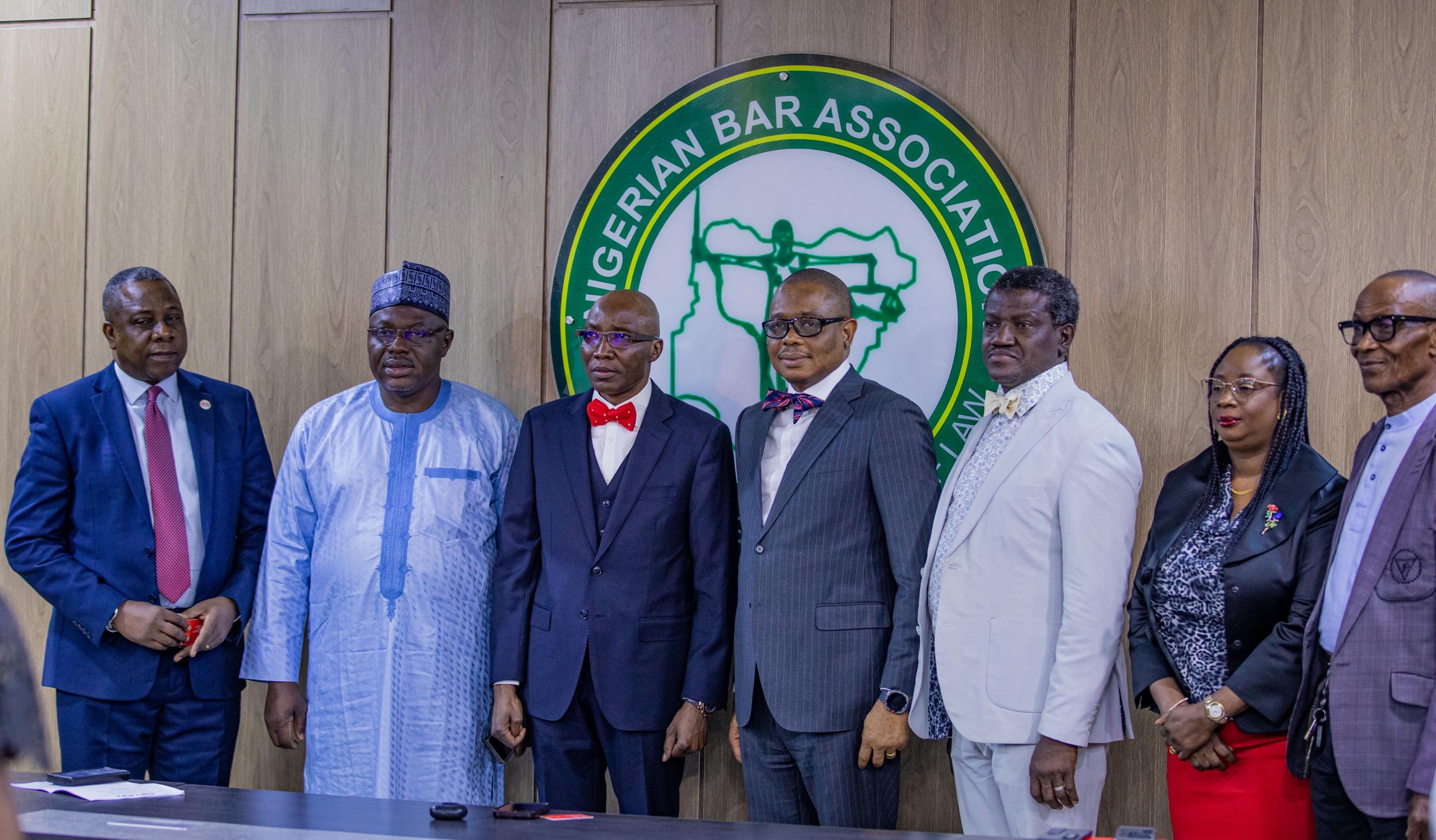
The President of the Nigerian Bar Association, Mazi Afam Osigwe, SAN, today received in audience the leadership of the Chartered Institute of Forensic and Certified Fraud Investigators of Nigeria (CIFCFIN) at the NBA National Secretariat in a high-level engagement focused on strengthening Nigeria’s fight against fraud, forgery, and financial crimes.
Welcoming the delegation, the NBA President formally introduced the team to the structure and operational framework of the NBA Secretariat, reiterating that the Association’s mandate is fundamentally anchored on the promotion of the rule of law and the defence of human rights. He noted that Nigeria stands at a critical moment in its democratic and institutional development, one that demands visible and measurable commitment to combating corruption, fraud, and financial misappropriation.
He emphasized that prevention must take precedence over prosecution. According to him, while investigation and prosecution remain necessary, it is far more effective and less damaging to national integrity to build systems that prevent fraud from occurring in the first place. He stressed that recurring cases of forgery and misconduct continue to cause avoidable embarrassment to the country, weaken public confidence, and affect Nigeria’s global perception.
The Registrar of CIFCFIN expressed appreciation for the warm reception and introduced members of the Institute present at the meeting.
The President of CIFCFIN, Dr. Ilyasu B. Gashinbaki, described the visit as both an honour and a long-anticipated engagement. He informed the NBA leadership that the Institute was formally chartered on 21 December 2022 and has, within a short period, grown into a professional body with significant membership, including a notable number of legal practitioners.
He explained that CIFCFIN operates through four critical components, including a College of Forensic Investigators, and is empowered under its enabling Act to establish forensic laboratories. These laboratories are designed to support investigations across Nigeria and are accessible to individuals, institutions, and law enforcement agencies requiring forensic expertise.
Dr. Gashinbaki underscored that no modern criminal justice system can function effectively without forensic analysis. From document authentication to digital forensics and financial tracing, forensic science has become indispensable to credible investigations and judicial outcomes. He further disclosed that the Institute has trained over 6,000 members in the last three years and has actively engaged the three arms of government to promote the integration of forensic standards into public institutions.
A major focus of the engagement was the role of forensic systems in safeguarding Nigeria’s democratic process ahead of the 2027 general elections. The CIFCFIN President explained that the Institute has engaged chairmen of political parties across Nigeria to emphasize the importance of forensic verification in the electoral process, particularly in addressing issues such as certificate forgery and questionable documentation. He advocated for pre-primary forensic vetting mechanisms to ensure that candidates’ credentials are properly verified before internal party processes are concluded.
He appealed to the NBA to take leadership in convening stakeholders, including IPAC, INEC, and other relevant institutions, to mainstream forensic verification into Nigeria’s electoral architecture. According to him, this would significantly reduce post-election disputes and the reputational damage that arises when fraudulent qualifications are discovered after candidates have emerged.
In addition, he proposed structured capacity-building programmes for both the Bench and the Bar on forensic science and evidentiary applications in litigation. The Institute expressed openness to executing a Memorandum of Understanding with the NBA to formalize collaboration and drive sustained stakeholder engagement.
Responding, the NBA President acknowledged the grave institutional and reputational damage caused by fraud-related scandals in Nigeria. He cited instances where even members of the judiciary have faced disciplinary consequences over issues linked to forgery, stressing that such occurrences deeply undermine public trust in governance and justice institutions.
He reiterated that Nigeria must move from a reactive model to a preventive model. “Our systems must function in a way that gatekeeps against forgery,” he noted, adding that the embarrassment caused when fraudulent credentials are discovered after appointments or elections has far-reaching consequences, not only domestically but also in how Nigeria is perceived by foreign governments and international agencies.
The NBA President welcomed the proposed collaboration, describing it as both timely and strategic. He affirmed that the establishment of CIFCFIN aligns with the broader national objective of ensuring that documents, certifications, and transactions emanating from Nigeria are credible and trustworthy. He further encouraged the Institute to explore the licensing of qualified private entities to operate forensic laboratories, as this would expand access, deepen awareness, and build a nationwide culture of forensic compliance.
Concluding the engagement, the NBA President committed the Association’s readiness to collaborate with CIFCFIN in raising awareness, promoting forensic literacy within the legal profession, and strengthening Nigeria’s institutional safeguards against fraud and forgery.
The meeting signals the beginning of what promises to be a strategic partnership aimed at reinforcing democratic integrity, modernizing Nigeria’s criminal justice system, and restoring confidence in the authenticity of Nigerian credentials and transactions. At a time when institutional credibility is both a national asset and a global currency, the collaboration between the NBA and CIFCFIN represents a deliberate step toward building a Nigeria where prevention is prioritized, accountability is strengthened, and justice is supported by science.