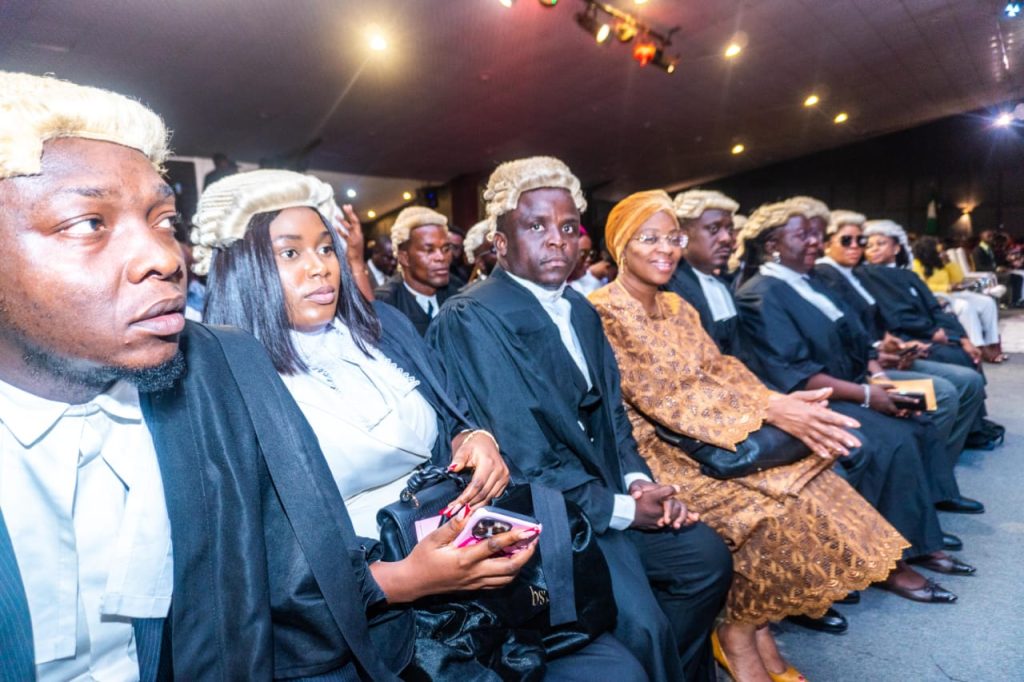
The 2026 Law Week of the Nigerian Bar Association (NBA), Garki Branch, Abuja, successfully concluded after three days of intensive intellectual engagement and policy discourse involving distinguished members of the Bar, policymakers, academics, regulators, security personnel, industry stakeholders, and legal practitioners.
The Law Week featured keynote addresses, goodwill messages, lecture sessions, and seven panel discussions addressing contemporary issues affecting legal practice, governance, technology, professional ethics, national development, and the administration of justice in Nigeria.
The sessions focused on critical areas including legal ethics, mentorship, security and self-defence, remuneration of legal practitioners, taxation, energy transition, climate change, intellectual property, cyber regulation, mental health, wellbeing, and civil liberties.
At the conclusion of the educative sessions, participants observed that the legal profession continues to evolve rapidly due to technological advancement, globalization, artificial intelligence, changing regulatory frameworks, and shifting societal realities. Speakers emphasized the need for lawyers to remain professionally relevant through continuous learning, technological competence, specialization, structured mentorship, and institutional capacity building.
Delivering the keynote address, the keynote speaker stressed the importance of adapting to twenty-first century realities through the effective use of technology, electronic filing systems, digital legal resources, and contemporary research tools.
The address noted that while Artificial Intelligence and digital platforms are increasingly relevant within legal practice, they cannot replace analytical reasoning, professional judgment, ethical responsibility, and strategic legal thinking. The keynote speaker remarked that “You cannot solve a 2026 problem with 1996 knowledge.”
During discussions on Security, Self-Defence and the Rule of Law, participants examined the relationship between legal practitioners and security personnel within constitutional democracy and justice administration. It was observed that institutional distrust and procedural misunderstandings often contribute to tensions between lawyers and law enforcement agencies.
The session emphasized that lawyers and security agencies must function as complementary stakeholders rather than adversaries.
The session on New Tax Laws and Staying Compliant examined Nigeria’s evolving tax framework and the implications of recent tax reforms for businesses, individuals, and legal practitioners.
Reference was made to the Tax Reform Statutes which came into effect in January 2026, including the Nigerian Tax Act, Nigeria Revenue Act, Nigeria Tax Administration Act, and the Nigeria Revenue Service Establishment framework.
At the session on Remuneration Order: Enforcement and Compliance, concerns were raised regarding underpricing of legal services and non-compliance with the Legal Practitioners’ Remuneration Order.
Participants emphasized that compliance remains essential for preserving the dignity, integrity, and economic sustainability of legal practice.
The panel on Mentorship and the Fit & Proper Lawyer underscored the importance of discipline, ethical conduct, professionalism, and mentorship within legal practice. Speakers noted that the “fit and proper” standard extends beyond academic qualification to include integrity, behavioural standards, professional responsibility, and moral character. The panel also observed that digital conduct now forms part of professional accountability.
Participants at the Energy Law, Renewable Transition and Climate Change session identified major challenges affecting Nigeria’s energy sector, including weak transmission infrastructure, regulatory fragmentation, licensing complexities, distribution inefficiencies, and policy inconsistency.
Reference was made to Section 20 of the Constitution of the Federal Republic of Nigeria, 1999, the Climate Change Act, 2021, and the Electricity Act, 2023.
The session on Intellectual Property and the Modern Economy examined emerging legal issues relating to copyright, trademarks, patents, trade secrets, artificial intelligence, digital innovation, and technology-driven content creation. Participants observed that existing intellectual property frameworks require modernization to address emerging digital realities effectively.
Mental Health, Wellbeing and Nutrition also featured prominently during the Law Week. Participants noted that the demanding nature of legal practice exposes lawyers to stress, burnout, emotional fatigue, and psychological pressure.
The session advocated for greater institutional support and normalization of conversations surrounding mental health within the legal profession.
At the Cybercrimes, Social Media Law, Enforcement and Civil Liberties session, speakers emphasized the need for social media regulation and cybercrime enforcement to remain consistent with constitutional safeguards, democratic principles, and internationally recognized human rights standards. Participants stressed that democracy cannot thrive without respect for civil liberties and fundamental human rights.
Following extensive deliberations, participants resolved that legal practitioners must prioritize continuous professional development, technological competence, ethical conduct, and institutional discipline.
The sessions also recommended stronger mentorship structures, enhanced enforcement of the Legal Practitioners’ Remuneration Order, modernization of intellectual property laws, harmonized energy sector regulations, improved mental health support systems, and rights-based cyber governance frameworks.
The Law Week further encouraged lawyers to continue playing active roles in public policy development, institutional reform, governance advocacy, and the protection of constitutional democracy.
Participants also called for greater participation, commitment, and institutional ownership by members of the NBA Garki Branch in future Law Week programmes and continuing professional development initiatives.
The 2026 Law Week of the Nigerian Bar Association, Garki Branch, concluded with a reaffirmation of the Branch’s commitment to professional excellence, institutional reform, democratic governance, rule of law, and the advancement of justice in Nigeria.
Photos:












Kindly find attached the official report.
COMMUNIQUÉ OF NBA GARKI BRANCH LAW WEEK COMMITTEE _260529_113607