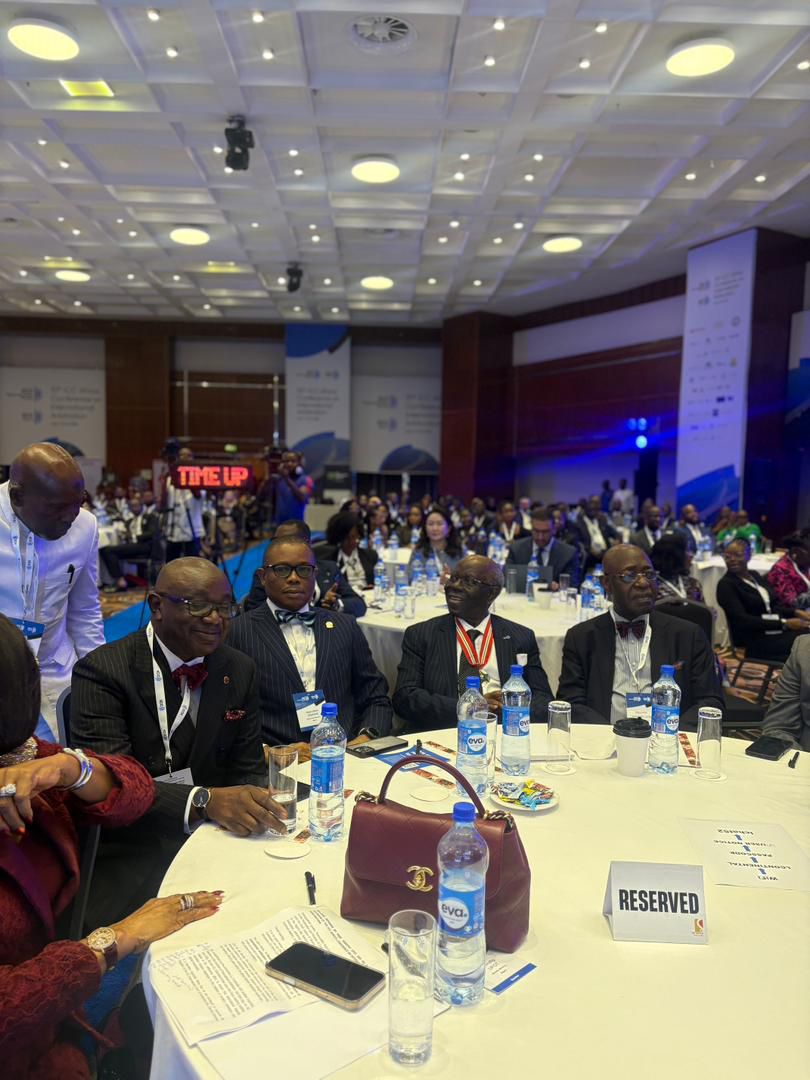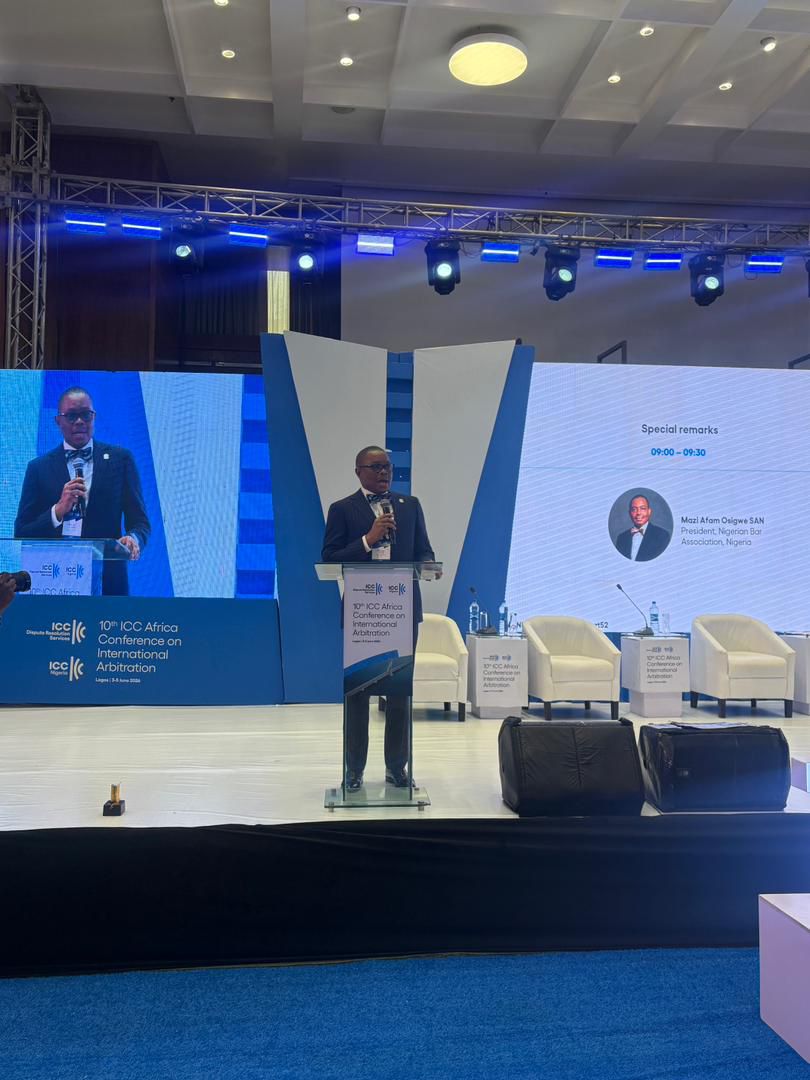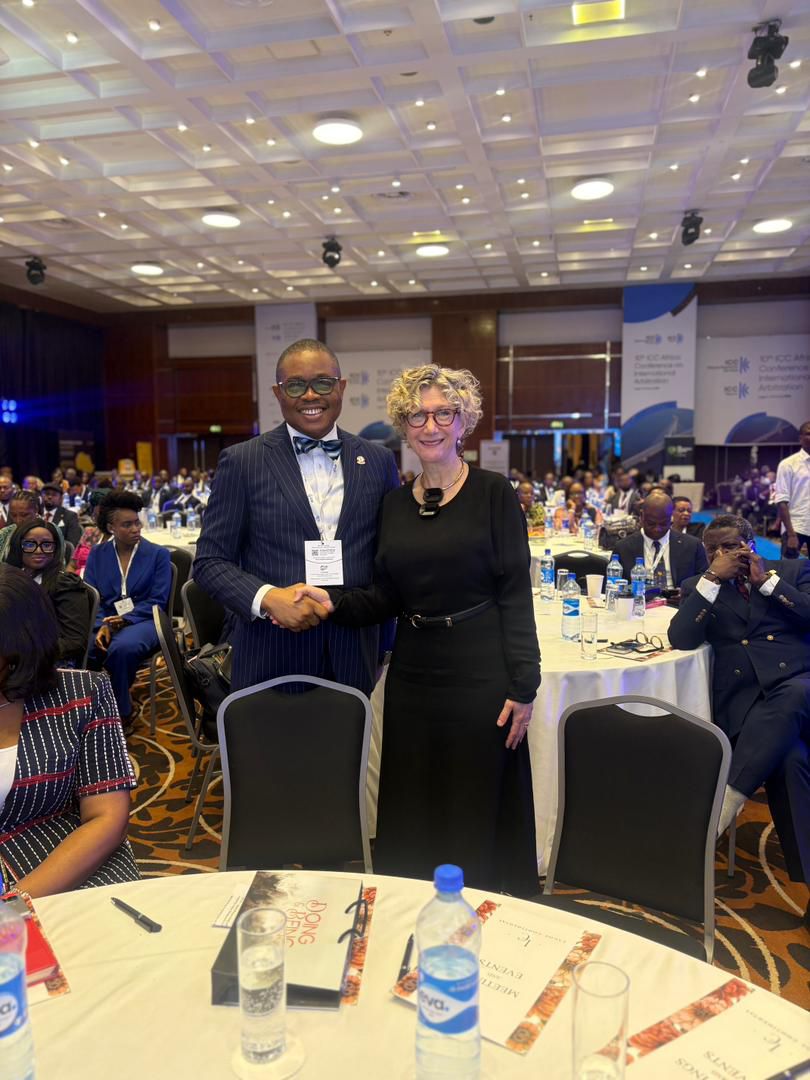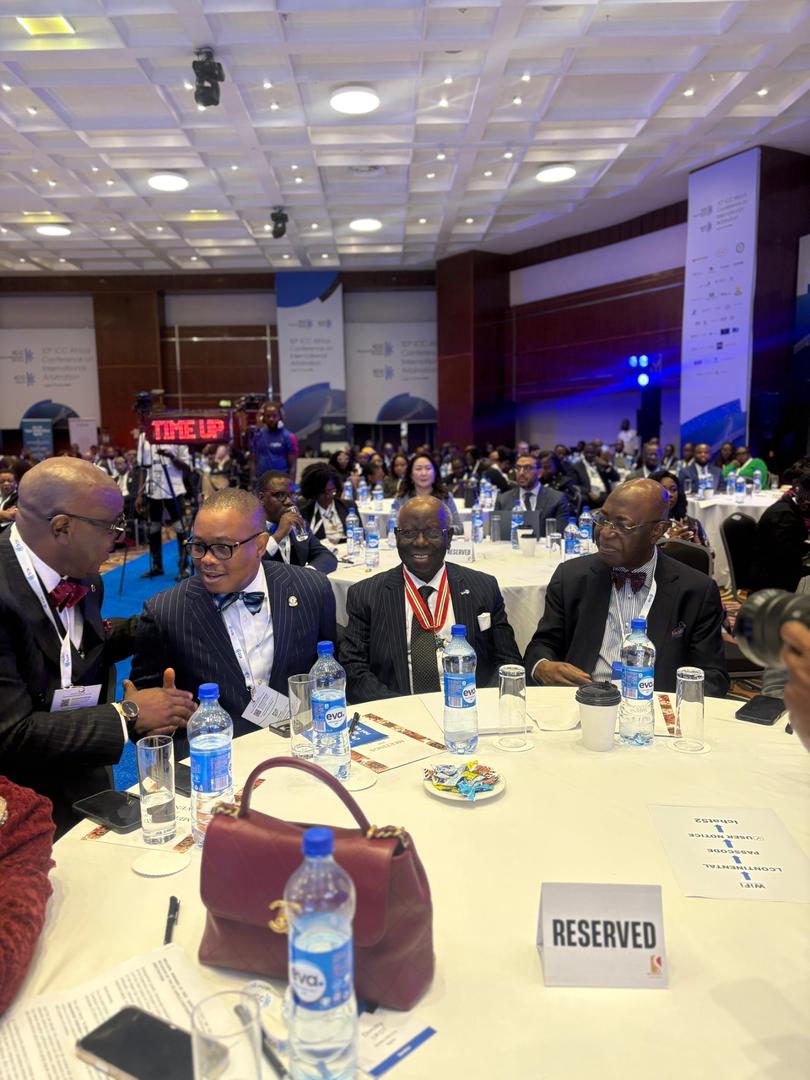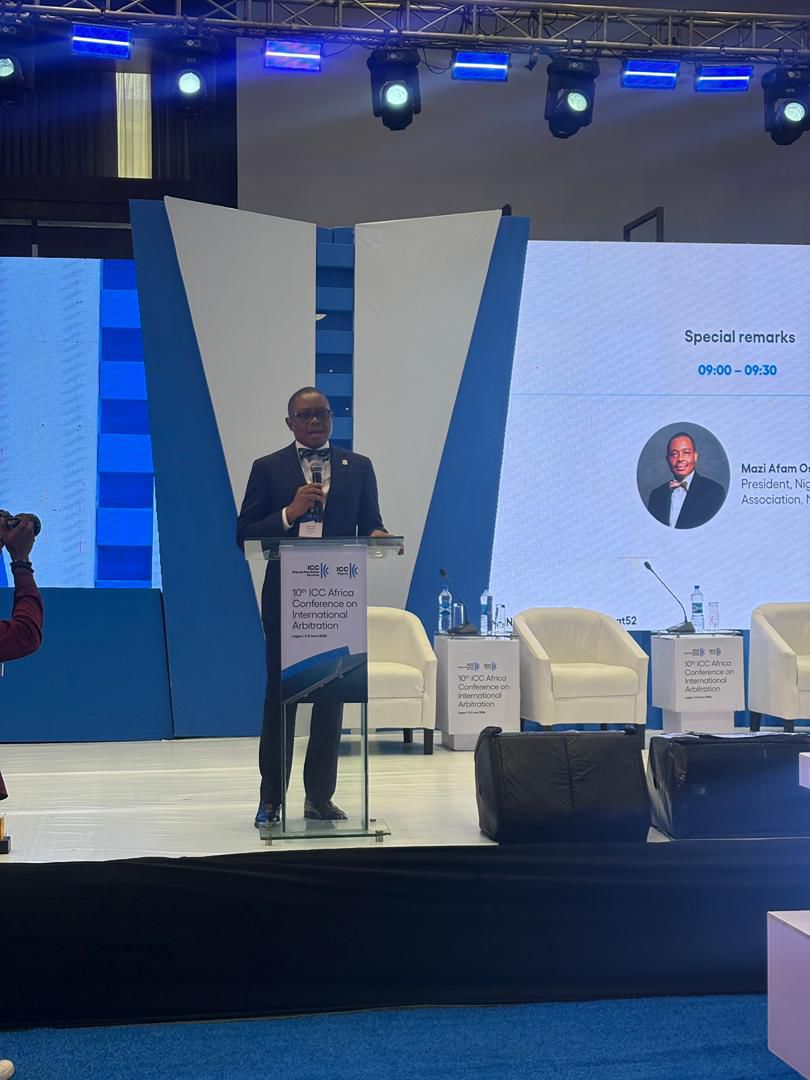
The President of the Nigerian Bar Association (NBA), Mazi Afam Osigwe, SAN, has called on African legal practitioners, arbitral institutions, policymakers, and business leaders to take deliberate steps toward positioning Africa as a preferred destination for international dispute resolution.
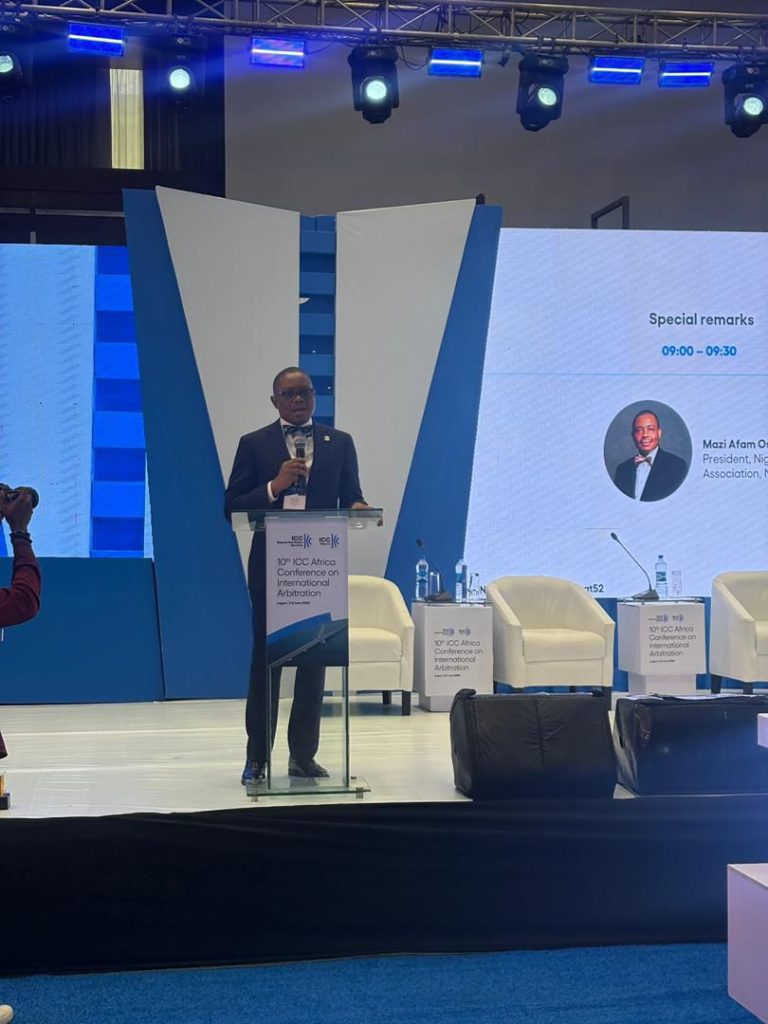
The NBA President made this call while delivering an address at the opening ceremony of the 10th ICC Africa Conference on International Arbitration & ADR, currently taking place in Lagos.
The landmark conference, which marks a decade of the ICC Africa Conference series, has brought together some of the continent’s leading arbitration practitioners, legal experts, academics, business executives, and dispute resolution professionals to discuss the future of arbitration and Alternative Dispute Resolution (ADR) in Africa.
Speaking at the event, Mazi Afam Osigwe, SAN, noted that the conference was not only an opportunity to celebrate ten years of growth and development in arbitration and ADR across Africa but also a moment for reflection and strategic planning.
According to him, Africa’s dispute resolution landscape has undergone a remarkable transformation over the years, with increasing confidence in arbitral institutions, a growing pool of highly skilled practitioners, and greater acceptance of ADR mechanisms as effective tools for resolving commercial disputes.
He stressed that these achievements should not be overlooked.
“Africa has made significant progress in developing its dispute resolution ecosystem, and those accomplishments deserve recognition,” he stated.
While acknowledging the gains made so far, the NBA President emphasised that the continent must take greater ownership of its dispute resolution future.
He observed that despite the notable progress achieved, there remains substantial work to be done to ensure that Africa becomes a globally recognised centre for arbitration and ADR.
According to him, the continent must move beyond merely participating in international dispute resolution conversations and begin actively shaping them.
This, he explained, requires stronger institutions, increased investment in capacity development, enhanced collaboration among stakeholders, and a commitment to maintaining international standards of excellence.
One of the central themes of the NBA President’s remarks was Africa’s immense human capital.
He highlighted the abundance of highly skilled and intellectually gifted professionals across the continent who continue to distinguish themselves in arbitration and dispute resolution at both regional and international levels.
From arbitrators and legal practitioners to academics and judges, Africa possesses a wealth of expertise capable of competing with the best anywhere in the world.
The challenge, he noted, is not a lack of talent but the need to create the institutional environment that allows that talent to flourish and gain wider global recognition.
He expressed confidence that with the right support structures and sustained commitment, Africa can successfully establish itself as a preferred hub for international dispute resolution.
The NBA President also called for a more balanced global narrative about Africa’s dispute resolution ecosystem.
While acknowledging the importance of confronting and addressing existing challenges, he argued that the continent must also be intentional about showcasing its successes.
According to him, Africa has recorded significant achievements in arbitration and ADR, many of which remain underreported despite their impact and significance.
He stressed that promoting these success stories is essential to building confidence among investors, businesses, and international stakeholders seeking reliable dispute resolution mechanisms.
A stronger narrative around Africa’s achievements, he noted, will help reinforce the continent’s credibility and attractiveness as a destination for resolving international commercial disputes.
Osigwe, SAN, commended the organisers of the ICC Africa Conference for providing a platform that encourages meaningful engagement among stakeholders.
He noted that conferences of this nature play an important role in fostering collaboration, sharing knowledge, identifying emerging trends, and developing practical solutions to the challenges facing dispute resolution systems.
He expressed optimism that the ideas and recommendations emerging from the conference would contribute significantly to strengthening arbitration and ADR practice across Africa.
As Africa continues to deepen regional integration, attract investment, and expand its participation in global commerce, the importance of efficient, credible, and internationally respected dispute resolution mechanisms cannot be overstated.
The message from the NBA President emphasized the fact that Africa has made substantial progress, but the next phase of growth will require deliberate action, stronger institutions, and greater confidence in the continent’s capabilities.
The 10th ICC Africa Conference therefore serves not only as a celebration of past achievements but also as a call to action for stakeholders across the continent to work together in building a dispute resolution ecosystem that reflects Africa’s immense potential and growing influence in the global economy.
With the talent, expertise, and determination already present across the continent, Africa is well positioned to become a leading force in international arbitration and ADR. The task now is to convert that potential into reality.