PROTOCOLS
There are moments when gratitude is difficult to put into words and the abundance of God’s grace leaves us humbled beyond anything we can adequately articulate. For me, this day presents such a moment.
My Lords, one year ago, I stood before this Honourable Court, in this hallowed chamber, to receive the rank of Senior Advocate of Nigeria – a milestone in my own professional journey.
I came with gratitude for the journey that had brought me into the Inner Bar, and a deep awareness of what the honour would ask of me.
Seated on the right side of this courtroom, I looked across to the left, where the President of the Nigerian Bar Association sat. I listened intently to the words he spoke that day, wondering whether God in His benevolence would bestow the same privilege on me. I knew the magnitude of the aspiration I carried, and I prayed afresh that members of the Nigerian Bar Association would entrust me with their mandate.
My Lords, that prayer was answered. Just one year later, here I am, standing proudly before this same Court, in this same hallowed chamber, as the 33rd President of the Nigerian Bar Association.
The profundity of this moment is not lost on me. My gratitude is deep, but I am humbled even more profoundly by the difference a single year has made.
The Court is the same. But the responsibility with which I stand before it has changed.
It is my second address before this Court as President of the Nigerian Bar Association. But this occasion carries a particular weight.
We mark the beginning of a new legal year and welcome colleagues into the Inner Bar. We also take stock – in the theatre of the Court whose word is final, with the entire citizenry of Nigeria as our audience – of how well our justice system has served the people in whose name it acts.
I stand before Your Lordships entrusted with the voices, concerns and aspirations of my colleagues across the country – and conscious of the millions of Nigerians whose lives are affected by the work we do together as Bench and Bar.
I do not take that trust lightly.
At my inauguration on the 28th of August 2026, I spoke of the journey from the call to the cause: ensuring that the law we have sworn to uphold reaches the people it was made to protect.
That cause requires us to confront a distance too many Nigerians know intimately:
The distance between a right written into law and a right truly enjoyed.
The difference between the justice they have a right to take for granted and the justice they actually get.
That, My Lords, is the distance we must close.
Recent events in Minna, Niger State, have brought that distance painfully into view.
The people who died had rights. Those arrested had rights. Any children among them had the right to expect special protection.
Did they enjoy those rights?
Did the presumption of innocence shape how they were treated? Did the duty to preserve life govern the decisions made about them? Were children recognised as children requiring protection?
We cannot answer those questions merely by pointing to a provision in a statute book.
Section 14(2)(b) of the Constitution declares that “the security and welfare of the people shall be the primary purpose of government”.
The Constitution protects human dignity and presumes an accused person innocent until proved guilty. The Administration of Criminal Justice Act and corresponding state laws require humane treatment of suspects. The Anti-Torture Act prohibits torture. The applicable child-rights laws provide special safeguards for children.
These protections must govern conduct from the moment of arrest. An arrest is not a verdict. An allegation of illegal mining puts no one beyond the protection of the law. Even a conviction does not extinguish human dignity.
Sadly, this is our reality and this must change.
Detention facilities must be subject to effective oversight. Access to lawyers and necessary medical care must be secured. Remand orders must receive the review the law requires. A credible complaint of abuse must lead to an investigation, and established responsibility must have consequences.
Where children are involved, their ages must be established promptly and the applicable safeguards observed. We must ask whether detention is necessary and lawful, ensure separation from adults where required, and bring child-protection services into the process. A child found working at a mining site may be a victim of exploitation. Treating that child only as an offender can compound the very wrong the law should remedy.
The National Bureau of Statistics’ 2022 Child Labour Survey estimated that 24.7 million Nigerian children aged five to seventeen were in child labour. That figure covers the country and many forms of work; it is not a count of children in mining. But it tells us the scale of the vulnerability against which our protective laws must operate.
The NBA has called for a credible investigation. The identities and ages of those involved the circumstances of their deaths and individual responsibility must be established. We must demand accountability with the same insistence on fair hearing that we bring to every other case.
And the inquiry cannot end at the detention facility. Government must account for how it regulates mining, traces mineral production and trade, and pursues those who finance and profit from unlawful operations. Who controlled these operations? Who benefited? Were children being exploited?
The apparent capacity of an unlawful enterprise to organise labour, move minerals and find buyers should make us all question any suggestion that the State is powerless to discover who stands behind it.
Enforcement must reach the organisers and beneficiaries where evidence establishes their responsibility. It must also provide lawful pathways for those whose livelihoods depend on mining. Arresting vulnerable workers will not, by itself, repair a failure of regulation.
Those questions belong with the authorities responsible for investigation, regulation and prosecution.
The NBA has constituted a team led by Mr Jonathan Gunu Taidi, SAN, working with the Minna Branch, to engage affected families and relevant authorities, monitor the investigations and help secure representation and remedies. We will press for accountability where responsibility is established, monitor any resulting prosecutions for fairness, and report on our work without compromising proceedings or the privacy of those affected.
My solemn promise is that we will not allow this tragedy to be swept under the carpet. Those deaths will not be in vain. An investigation must deliver answers and our advocacy must help secure the reforms those answers require.
I bring Minna before this gathering because it tests our common vocation. The investigation is not this Court’s task.
But each of us must use the authority we possess as stakeholders in the administration of justice. The person whose rights have been violated needs more than our concern. That person needs a response.
My Lords, expectations of the judiciary in general and the Supreme Court in particular, are high. They should be. Nigerians have invested this Court with extraordinary authority. They turn to it when an election divides the country, when the limits of executive power are disputed, when a person’s liberty is at stake, and when the law itself needs a clear direction. They deserve judgments that are independent, carefully reasoned and delivered while the answer can still make a difference.
A person may have a right to liberty and remain in unlawful detention. A worker may have a valid claim and be unable to afford the years it takes to enforce it. A court may give a sound judgment, and the successful party may discover that enforcement is another battle altogether.
My Lords, that distance is where public confidence is won or lost.
My worthy predecessors in office have all at one time or another, addressed waning public confidence, judicial independence, delay, access to justice and professional discipline at this ceremony. They have urged appointments based on merit, proper oversight of detention facilities, modern case management and timely decisions on questions of constitutional consequence.
I want to honour their service by asking what has changed. A concern does not become less urgent because we have spoken about it before. It becomes more urgent when the people affected by it, are still waiting.
My Lords, I speak about waning public confidence with deep regard for this Court. I thank Your Lordship and the Justices for the hours of study, the difficult deliberations and the burden of knowing that a decision will govern lives far beyond this courtroom. I acknowledge, too, the judges, magistrates, registrars and court staff whose daily work sustains the system.
This is honourable work that receives little attention. An unpopular judgment is not, for that reason, an unjust one. Yet we must acknowledge the depth of distrust with which many people now regard the justice system.
A report published by the respected Afrobarometer in June 2026, drawing on interviews with Nigerians conducted in 2024, found that only 25 per cent of respondents trusted the courts ‘somewhat’ or ‘a lot’. Only one in four respondents expressed trust in the courts. That is troubling. This measures confidence across the court system; it does not establish misconduct by this Court or any individual judge. But it is a finding with which we cannot be comfortable.
My fear though, is that we are becoming accustomed to it. We – lawyers and judges alike, hear the allegations, explain that some are unfair, express self-righteousindignation or irritation in some cases, casually point to the entire society as a barometer for how to measure any group’s conduct – and continue without another thought. Meanwhile, citizens keep lowering their expectations of what the justice system can do for them.
My Lords, we must not make our peace with that distance.
Just as a practical demonstration, I encourage us all to spend a little time listening to programmes like Brekete Family. The accounts we hear are not, by themselves, established findings against any judge. But they bring home, in sharp relief, the frustration of people seeking justice and the depth of the distrust we must address.
We the stakeholders in the justice system have a high level of institutional respect demonstrated by one for the other. However, the esteem in which we hold one another cannot be substituted for the confidence of the people we serve.
The judiciary does not create every condition that damages its reputation. Public authorities disregard orders. Counsel prolong cases, misrepresent decisions or suggest that access to a judge can be bought. Disappointed litigants sometimes call an adverse decision corruption. Regrettably, whatever its source, the blame falls on the court.
The Bar must correct misinformation and explain lawful outcomes honestly. We must preserve the freedom to question a judgment’s reasoning, but not before we have actually read the judgment and we understand the issues. A television interview or a social media pontification even before apprising ourselves of the facts is no substitute for that work.
We ask no court to decide a case to please the public. But we ask that we all take responsibility for the experiences that shape public confidence – whether both sides are heard, whether a young lawyer receives the courtesy extended to senior counsel, and whether credible complaints are examined fairly through the proper channels. Silence can deepen suspicion; an unsupported accusation can inflict grave harm. Our response must be fair to the complainant and to the person complained against.
There are standards already before us that deserve to be celebrated and followed. One is this Court’s fidelity to punctuality.
As I said at the BOSAN induction, I have never attended a sitting of this Court that did not begin at nine o’clock on the dot, or, as we witnessed this morning just before the appointed hour. Your Lordships lead by admirable example.
I recently attended my first NJC meeting. A delayed flight from Lagos made me late on the first day. I was determined to be the first to arrive on the second. Imagine my embarrassment when I arrived at 9:45 a.m.for the 10am meeting and found every one of theirLordships already in the room. None had just arrived. My predecessor in office, Mazi Afam Osigwe, SAN; himself renowned for his punctuality, was already there too.
I had come hoping to show a good example. I found one waiting for me.
That discipline deserves to travel through the judiciary and the profession. A litigant who arrives on time should not be left wondering whether the court will sit. A junior lawyer should learn that preparation includes being ready before the business begins. Respect for people’s time is part of respect for the people themselves.
My Lord, the Honourable Chief Justice, this crisis of public confidence calls for a focused nationwide Bench–Bar effort, through the appropriate institutions and in collaboration with heads of courts. Let it draw on the experience of court users and identify achievable priorities: punctual sittings, fewer avoidable adjournments, clearer access to judgments and information, and fair, timely consideration of credible complaints.
Let responsibilities be clear and progress visible. Reliable information about pending matters, the time different cases take and the causes of delay would help allocate resources and show the public the scale of the courts’ work, while protecting litigants’ privacy and judicial independence.
The NBA will continue to defend judges and the judiciary, in consonance with our aims and objectives,against intimidation and improper interference, and bring substantiated complaints through the proper channels. We must also clean our own Augean stable and we will, so help us God. Credible allegations of professional misconduct will be pursued through the proper processes, with fair hearing. For we cannot seek scrutiny of the judiciary while reserving exemption for ourselves.
As we approach the next general election, the need is urgent. Political passions will test public confidence. Decisions must rest on law and evidence, through a process whose fairness can be seen. Counsel must present cases responsibly and resist turning a client’s disappointment into an unsupported accusation against a judge.
This Court’s jurisdiction is defined by the Constitution and the law. Its influence extends through the principles it settles and the example of its own administration. It is to that work that I now turn.
Your Lordship, the 2024 Rules already provide for electronic filing, virtual hearings and electronic case management. The Practice Directions effective from 1 July 2026 carry that work forward through mandatory electronic submissions. I acknowledge the leadership behind these changes.
A reliable electronic system can spare counsel uncertainty about a process. A properly conducted virtual hearing can spare parties costly journeys. But a reform has not reached the litigant if the matter still cannot proceed. So we must follow it through to the experience it is meant to improve.
The question therefore to ask is this: Will a person with an ordinary case notice the difference our reforms make? That must be our test.
Within this Court’s powers, I respectfully ask that the new case-management framework be used to review long-pending appeals, identify matters requiring urgent consideration and give the directions needed to bring them to hearing. Clear information through the Registry should help counsel understand what remains outstanding and keep their clients informed. Properly brought applications for the fee protection available to eligible litigants should also receive timely consideration. The Bar must do its part by preparing cases properly and helping those who need representation to seek that protection.
We must also change our own conduct. We cannot complain of congestion while multiplying needless applications, raising objections without substance or seeking time we do not need.
Beyond administration, stakeholders must bring proposals to the legislature on constitutional and legislative appellate reform. A procedural rule cannot narrow constitutionally protected rights of appeal. Reform must preserve meaningful access while enabling this Court to resolve questions of national importance and develop the law with the care its finality demands.
And when the courts have spoken, those bound by their orders must obey them, subject to any lawful stay, variation or setting aside.
The rule of law does not depend on whether a judgment is convenient to the person against whom it is made.
Public officers have a particular responsibility here. They exercise authority under the Constitution, and they cannot claim its protection while treating fidelity to the institutions the Constitution establishes as optional.
To my learned colleagues, this brings me to our own house.
Since I assumed office, the largest share of the correspondence reaching the office of the President has consisted of petitions against lawyers. The volume is disturbing.
Each petition is an allegation, to be examined fairly. No lawyer should be condemned unheard, and no lawyer will be. But each petition is also a person asking whether the profession can be trusted to examine one of its own. Our answer lies in the diligence and fairness with which we act.
When a lawyer misuses money entrusted to him, misleads a client, fails to communicate or claims an influence over a judge that no lawyer should claim, the injury extends beyond the immediate parties. It permeates the public’s understanding of the profession.
Nor can formal discipline do all the work. Much of professional integrity depends on self-accountability and respect for the noble profession to which we belong. It begins with decisions taken long before a petition arrives: whether to give honest advice, keep proper accounts, separate clients’ funds from the firm’s money, prepare adequately, or refuse an instruction that requires deception or abuse of process.
Every person accused of wrongdoing is entitled to representation. But accepting a brief cannot mean surrendering our professional judgment to the person who pays the fee. We may defend a client’s rights, but we may not lend our office to the client’s dishonesty.
We must be able to say: “I can represent you, but I cannot do that for you.”
Our complaint and disciplinary processes must protect the public, afford practitioners fair hearing and reach outcomes within a reasonable time. In this regard, I welcome the Body of Benchers’ establishment of an ad hoc committee, of which I am privileged to be a member, to examine the issues surrounding appeals from the Legal Practitioners Disciplinary Committee. Work has commenced in earnest, and I am proud to have contributed to the work required to secure clarity.
To our new Senior Advocates, I speak as a colleague who occupied your place barely a year ago.
I recall that I was intrigued by the speed with which I was sworn in within 5 minutes of the ceremony starting. I felt as I did so many years ago, when I got married. Within 15 minutes of the Church Service, I was married!
I am still learning what it means to carry this honour well. What I ask of you is also an undertaking I must keep.
You have earned a distinction. Now you have an opportunity to influence what distinction means in this profession.
Please carry younger lawyers with you. Take briefs whose value is not measured only in fees. Tell a client the difficult truth when the case requires it. Let the honour conferred today be visible in the way you practise tomorrow.
Although I direct the next few comments to you my newly conferred Senior Advocates, I speak to us all.
Younger lawyers are watching. Many feel that the profession they were encouraged to enter has not given them the support, fair reward or opportunity they expected. We must listen to them without treating their disappointment as disrespect.
They hear us speak of dignity. Then some return to chambers where their pay cannot meet the basic costs of going to work every day.
They hear us speak of mentorship. Then some spend years carrying responsibility without meaningful training or a clear path to advancement.
They hear us speak of integrity. Then they watch what we excuse when the client is important or the fee is attractive.
The profession they inherit will be shaped by the conduct we reward today.
The younger lawyer in your chambers learns from how you treat a colleague, how you respond to defeat and what you do when a client asks you to cross a line. Your example becomes someone else’s understanding of what this profession permits. Please make your exampleworthy of imitation.
Pay the lawyers who work with you fairly and promptly. Review their remuneration against their responsibilities and the cost of living. Where the economics of your practice make that difficult, examine those economics honestly; do not make the youngest lawyer bear every consequence. Give them clear terms of employment. A junior lawyer should not have to plead repeatedly for wages already earned.
Teach them how to practise. Give them access to the resources they need. Credit their work. Let them learn from your preparation and judgment. Give them room to grow.
Continue the pro bono service you undertook in seeking this rank. Honour the obligations to clients whose matters helped you qualify. Open opportunities to able colleagues who have had fewer of them. Prepare well, resist an unnecessary application even when it would earn a fee, and explain an adverse judgment honestly,even when blaming the judge would be easier. Let the honour conferred today improve the experience of those who depend on you.
My prayer is that you will wear the rank well, live long to enjoy it, and do nothing to bring it or yourselves into disrepute.
Permit me also to offer a special word of congratulations to the women among our new Senior Advocates. Four females have been sworn in today including the youngest female senior advocate ever elevated to date – Mrs. Olamide Mojigbotoluwa Adekunle, SAN, who turned 40 in June this year. One can only imagine the sacrifices she and the others made to get here. Having walked that road myself, I know that the journey can demand more than professional excellence and hard work.
Women often pursue this rank while carrying a disproportionate share of family responsibilitiesalongside their professional obligations, navigating assumptions about their availability and ambition, and having to establish their authority in spaces where it is more readily accorded to men.
Recognising them is therefore much more than just a gesture of inclusion. It is an acknowledgement that the path is still not equally clear for everyone, and that their achievement deserves to be celebrated robustly, with an understanding of what it has taken them to get here. I celebrate you!
I extend this charge to our other senior colleagues, especially my brother and sister Silks, as leaders of the profession.
A living wage should not be an unwelcome subject in a profession that speaks so often about justice. We cannot ask young lawyers to stand upright while the conditions of their work are steadily bringing them to their knees.
Economic hardship affects us all. If it affects us, it certainly affects our younger colleagues more. It cannot excuse indifference to their plight or relieve us of addressing avoidable hardship within our own chambers.
At my inauguration, I said that an economically vulnerable lawyer is not truly professionally free. That concern belongs here, because the quality of legal service depends on the people who provide it.
The NBA will continue to engage senior lawyers on this issue and pursue practical support for fair remuneration, access to knowledge and professional opportunity. But no NBA programme can replace the daily decisions of those who employ and lead other lawyers.
Paying a salary on which a colleague cannot meet the basic costs of working and living is an outdated model of practice because it is tantamount to modern day slavery. I plead with us to change.
The juniors in our chambers are people God has entrusted to us to nurture. Many of us have children who have followed in our footsteps. Would we be happy for them to earn what we pay those entrusted to our care?
My Lords, at my inauguration I asked members to hold our administration to account. I bring that undertaking before this Court.
My Lords, the country asks much of this Court. It also needs the Court to have the independence, people, tools and time to do its work. The NBA will be a candid and constructive partner: speaking when something is going wrong, acknowledging progress, bringing evidence where there is failure and practical assistance where our members can help. We will defend the Bench’s independence and accept responsibility for the Bar’s conduct. Our loyalty is to the Constitution, to justice and to the people whose confidence sustains both our institutions.
I return to Minna because our responsibility cannot end with the statement we issued. Earlier, I asked whether those affected enjoyed the rights the law gave them. When we meet again, the question for my administration must be: what have we done to make those protections real? We must be able to account for our follow-up with the families and authorities, our scrutiny of the investigations and the legal assistance we have helped secure. Our work must continue after public attention has moved elsewhere.
The same seriousness is needed in routine detention oversight. Visits to police stations and other places of detention, where the applicable criminal justice law requires them, should result in records and corrective action. A person should not disappear into a remand process that nobody reviews. The NBA will help by gathering reports from branches, supporting counsel who challenge unlawful detention, and bringing recurring failures to the attention of the relevant heads of court and authorities.
My Lords, I come before you at the beginning of my tenure. I will not claim that the Association can solve every problem I have named. I can say what we intend to do: listen to our members and to court users; work with the Bench on practical reforms; defend lawyers and litigants when their rights are threatened; and hold ourselves to the professional standards we urge upon others. We will measure our work by what changes in people’s lives, not by how many declarations we make.
My Lords, when by the grace of God, we meet at the opening of the next legal year, I pray that we will be able to answer a few plain questions with evidence.
Were important cases heard and decided while the answers still mattered?
Did more long-pending appeals reach a hearing sooner?
Could litigants understand where their cases stood, and could eligible people obtain the fee protection the Rules provide?
Were fewer hearing dates lost to avoidable failures?
Were credible complaints examined fairly?
Did the NBA follow through on its promise?
Did younger lawyers experience the dignity we ask them to defend?
Could more Nigerians obtain help before a legal problem became a crisis?
Our answers should be found in records, and in lives. In a person freed from unlawful detention. In a family able to bring its appeal to a conclusion. In a young lawyer paid fairly and equipped to serve. In a citizen who lost a case but left the courtroom knowing that the hearing had been fair.
My Lords, the robes we wear will be put away at the end of today’s ceremony. But the responsibilities they signify will remain. And if we can answer those questions better a year from now, this ceremony will have served a purpose beyond the robes and the speeches.
That is how confidence grows and the distance closes; one experience of justice at a time.
The importance of this day lies partly in the people who will never be present at it.
A person seeking protection from unlawful detention and wondering whether the law can help him or her.
A family waiting for an appeal or deciding whether to keep pursuing a case.
A lawyer trying to advise a client correctly.
A child whose future depends on protection arriving on time.
They may never hear this speech.
But they should feel the difference made by what follows it.
That, My Lords, is the cause before us – to carry the law all the way to the lives it was made to protect. And to close the distance between a right written into law and a right truly enjoyed.
I wish this Honourable Court a fruitful and impactful new legal year, and an election season in which fidelity to the law strengthens, not further diminishes, public confidence.
May God bless the Supreme Court of Nigeria, the Nigerian judiciary and the labours of our heroes, past and present, whose service has sustained, and keeps sustaining it.
May God bless the Nigerian Bar Association.
And may God bless the Federal Republic of Nigeria and all its people.
Amen.
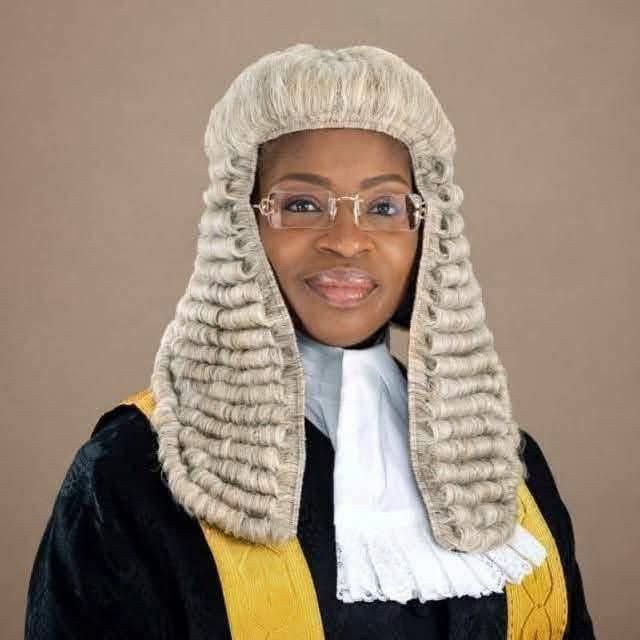
Oyinkansola Badejo-Okusanya, SAN FCIArb
President, Nigerian Bar Association