From tax reforms to arbitration integrity, Day Three sessions confront the practical and ethical challenges shaping the legal profession
Lagos, Nigeria — April 9, 2026
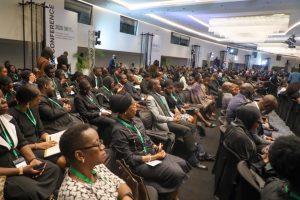
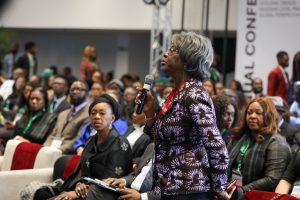
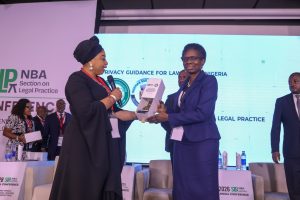
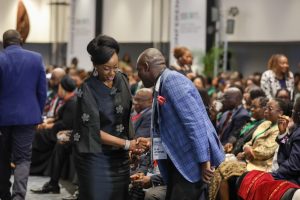
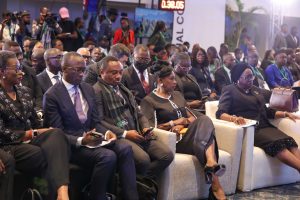
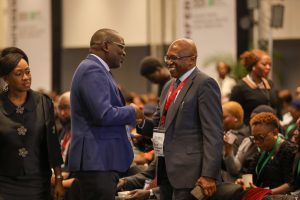
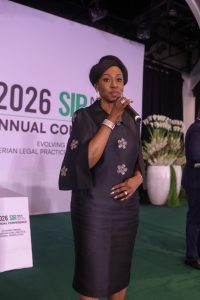
Day Three of the Nigerian Bar Association Section on Legal Practice Conference 2026 delivered one of the most intensive and practice driven engagements of the conference, as stakeholders examined the intersection of innovation, regulation, ethics, and sustainability in legal practice.
The day commenced with a fireside chat on “From Policy to Practice: Making Sense of Nigeria’s New Tax Reforms,” featuring Taiwo Oyedele, Honourable Minister of State for Finance.
Moderated by Abiola Sanni, SAN, the session provided critical clarity on emerging tax policies and their practical implications for legal practitioners advising clients in a rapidly evolving fiscal environment.
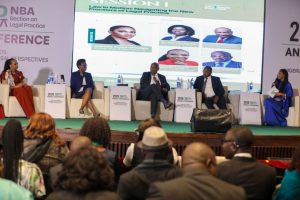
This was followed by Plenary Session 1, themed “Law in Motion: Navigating the New Frontiers of Legal Practice.”
Moderated by Xerona Duke-Phillips, the session featured Olubunmi Fayokun, Ikechukwu Ekwueme, Genevieve Nwodo Wakeley-Jones, and Idris Mohammed.
Panelists examined how technology, globalization, and shifting client expectations are redefining legal services, urging practitioners to remain adaptable and forward-thinking.
In Plenary Session 2, discussions turned to “Guardrails of Justice: Ethics, Accountability and Independence in the Nigerian Legal Profession.”
Moderated by Sam Kargbo, SAN, the panel—including Elsie N. Thompson, Ayokunle Olayinka, E.C. Ukala, Olugbemisola Titilayo Odusote, and Paschal Ukah emphasized that ethical discipline and institutional independence remain the backbone of a credible justice system.
The conference then moved into more technical terrain with
Plenary Session 3, which addressed “The Proper Garnishee: Rethinking ‘Net Casting’ and Evidentiary Thresholds.”
Led by Paul Johnson, the panel—featuring Olamide Ibrahim, A. Bisola Harris, Lebile Adekunle Okunnu Ogbole, SAN, and Buba—focused on the practical realities of garnishee proceedings, highlighting the need for precision, evidentiary rigour, and restraint in enforcement processes. Attention then shifted to the economics of legal practice in Plenary
Session 4, themed “The Legal Practitioners’ Remuneration Order: Confronting Professional Sustainability for Law Practice in Nigeria.”
Moderated by Emeka Obegolu, SAN, panelists including Vivienne Okocha, Orowhuo Okocha, Oluseun Abimbola, SAN, Maryam Aladipo, and Kayode Mohammed examined the sustainability of legal practice, calling for stricter adherence to remuneration standards and a broader rethink of value within the profession.
Rounding off the day,
Plenary Session 5 explored “Fair or Favoured? Arbitrator Conduct and the Integrity of Proceedings.”
Moderated by Babajide Ogundipe, FCIArb, the panel comprising Aisha Ado Abdullahi, Laura Alakija, Babajimi Ayorinde, and Henry Chibor examined bias, independence, and ethical responsibility in arbitration, underscoring the importance of maintaining trust in alternative dispute resolution mechanisms.
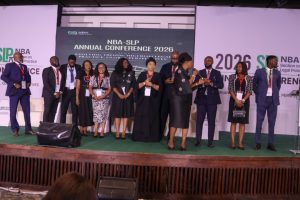
In closing the day’s proceedings, the Chairman of the Nigerian Bar Association Section on Legal Practice delivered a vote of thanks, expressing appreciation to all delegates, speakers, and participants for their active engagement and contributions to the success of the conference and its plenary sessions.
Across all sessions, a unifying theme emerged: the future of legal practice will be shaped not only by innovation, but by integrity, precision, and sustainability.
Day Three firmly positioned the conference as a platform not just for dialogue, but for confronting the real challenges facing the legal profession in Nigeria.
Photos: