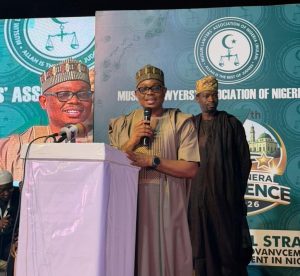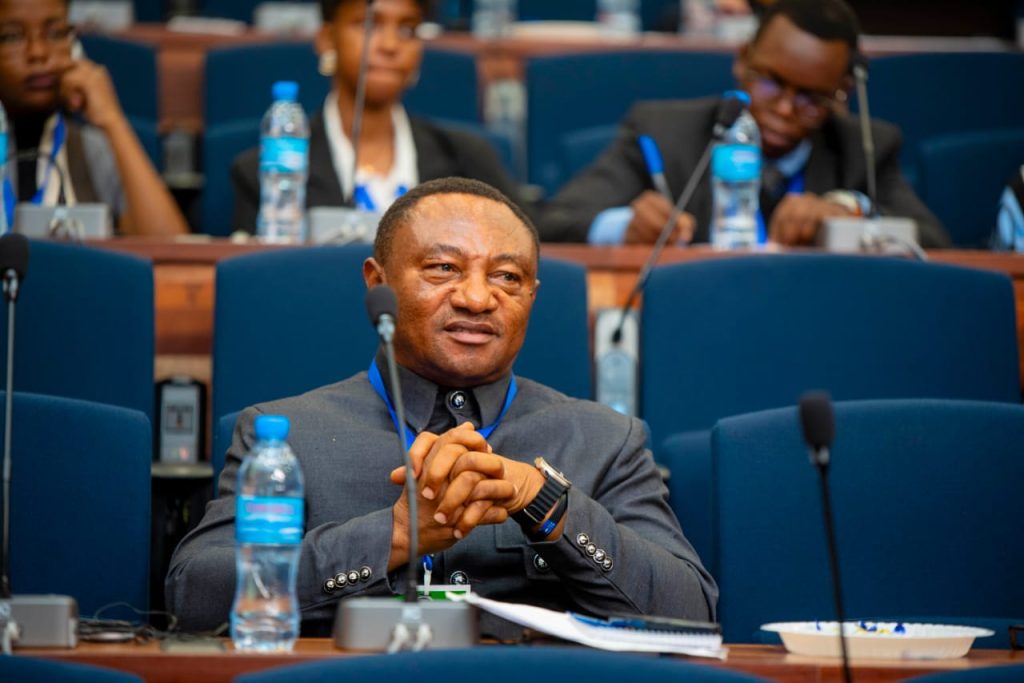
The President of African Court on Human and Peoples’ Right,
Honorable judges of African Court on Human and Peoples’ Rights,
The Executive Director of the court,
Distinguished colleagues, Representatives of AU Member States,
Stakeholders,
Members of the Press,
Ladies and gentlemen.
I am exceedingly excited to be invited for this special Assembly. For me it is an honor to be in your midst at this significant milestone and I cherished it so dearly. Distinguished Ladies and gentlemen, I bring you greetings from the President of the largest and strongest bar in Africa, Our own Mazi Afam Osigwe SAN and indeed, the entire members of Nigerian Bar Association.
As we gather on the margins of the 80th Ordinary Session, the broader reflection on the Court’s journey is important. Its jurisprudence has grown. Its visibility has expanded. Its promise remains profound. The question is, what do AU Member States truly think about the African Court, and what are we prepared to do about it?
Member States’ perspectives matter more than any academic commentary or civil society endorsement ever could. The Court exists because states willed it into being. It draws life from instruments such as the African Charter on Human and Peoples’ Rights, and from the political commitment that transformed ideas into enforceable obligations. So we are discussing “perspectives,” we are examining the relationship between ownership and responsibility.
The truth is, across the continent, that relationship is complex. Many Member States see the Court as an ally in strengthening domestic rule of law frameworks. Others approach it with caution, particularly when judgments require legislative amendments, or administrative reform. This diversity of perspective is not inherently negative. In fact, it reflects the varied constitutional, political, and social realities across Africa. The issue is whether those perspectives ultimately converge on a shared commitment to compliance and institutional support.
From the standpoint of the Nigerian Bar Association, the credibility of Member States is most visible in moments of implementation. Ratification is commendable. Participation in sessions is commendable. Public affirmation of human rights is commendable. However, the true perspective of a state is revealed when a judgment requires action at home. Compliance frameworks, budgetary allocation, judicial domestication, and executive coordination are where principle become practice. That is where confidence in the Court is either strengthened or weakened.
This gathering rightly challenges us to look forward as emerging human rights issues are reshaping governance across the continent. Security responses, digital regulation, migration management, and civic space debates are testing legal systems in real time. In this context, Member States must decide whether they see the Court as a distant appellate forum or as a strategic partner in navigating these complexities. A proactive perspective invites dialogue, encourages early engagement, and integrates the Court’s jurisprudence into domestic legal reasoning. A reactive perspective on the other hand waits for litigation and then debates legitimacy.
Our focus should be on Strengthening the Court’s institutional capacity and visibility as this goes hand in hand with Member States’ attitudes toward it. Financial sustainability, respect for its authority, restoration or maintenance of access mechanisms, and structured national implementation processes investments in continental legal coherence. Member States signal confidence in a shared African standard of justice when they support the court consistently.
The Nigerian Bar Association believes that the next chapter of the African Court will be defined by the steadiness of Member States not by its judges or docket. If states engage the Court with maturity and resolve, its mandate will naturally expand in impact and legitimacy. If there’s a hesitation in doing so, Progress will slow. The choice rests with us. Our perspective must rise above convenience and reflect conviction. When Member States begin to demonstrate that conviction in action, the strength of the African Court will become a continental reality.
Thank you for your indulgence.
Sabastine Anyia
1st Vice President, NBA
& Chairman NBA Human Rights Institute.